
Pythagorean Theorem Calculator
Please provide any 2 values below to solve the Pythagorean equation: a2 + b2 = c2.

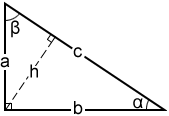
The Complete Guide to Pythagorean Theorem Calculator: Master Right Triangle Calculations with Precision
Use this calculator to instantly find any missing side of a right triangle. Enter two known sides, and it solves for the third using the formula a² + b² = c². Whether you're calculating hypotenuse length or finding a missing leg, this tool handles the square roots and squared values automatically. Below, you'll find step-by-step instructions, real-world applications, and common mistakes that even professionals make.
Most online articles explain the Pythagorean theorem the same way—textbook definitions, a few examples, maybe a 3-4-5 triangle reference. This guide won't. We'll go deeper into practical applications, expose the calculation errors that plague construction sites, and explore how this 2,500-year-old formula powers modern technology from video games to GPS systems.
The Mathematical Foundation: Why a² + b² = c² Actually Works
Before touching a calculator, understand what you're actually computing. The Pythagorean theorem states that in any right triangle, the square of the hypotenuse equals the sum of the squares of the two legs. But why?
Visual proof exists in ancient Babylonian clay tablets dating to 1900 BCE. Chinese texts from 1000 BCE demonstrate the relationship. Pythagoras of Samos formalized it around 500 BCE, though evidence suggests others knew it centuries earlier. The theorem has been proven over 400 different ways—geometric proofs, algebraic proofs, even proofs using calculus.
The simplest visual proof: arrange four identical right triangles inside a square. The triangles form a smaller inner square. The area calculations reveal the relationship. This isn't abstract math—it's geometry that describes how space folds on itself.
Three critical facts about right triangles:
- The hypotenuse is always the longest side, opposite the 90-degree angle
- The two legs (sometimes called catheti) form the right angle
- Any triangle satisfying a² + b² = c² is necessarily a right triangle—there's no exceptions
Try this stress test: take a triangle with sides 5, 12, and 13. Square each: 25 + 144 = 169. The relationship holds perfectly. This is a Pythagorean triple—integer sides satisfying the theorem exactly. Others include 8-15-17, 7-24-25, and 9-40-41.
Understanding Your Calculator: Interface and Input Methods
A well-designed Pythagorean theorem calculator presents three input fields: side a, side b, and side c. One field remains empty—the one you're solving for.
Most calculators offer these calculation modes:
- Find Hypotenuse: Input legs a and b. Calculator computes √(a² + b²)
- Find Leg (a): Input hypotenuse c and leg b. Calculator computes √(c² - b²)
- Find Leg (b): Input hypotenuse c and leg a. Calculator computes √(c² - a²)
The calculator performs two operations: squaring the inputs, then calculating the square root of the result. Modern implementations display results to 2-6 decimal places depending on precision settings.
Input validation matters. The calculator rejects impossible triangles—entering legs of 10 and 10 with a hypotenuse of 15 will trigger an error because 10² + 10² = 200, and √200 ≈ 14.14, not 15. This error message protects you from mathematically impossible inputs.
Step-by-Step: Finding the Hypotenuse (c)
Scenario: You know both legs but need the diagonal distance.
Step 1: Identify your two known sides. Label the longer leg b if there's a difference, though mathematically it doesn't matter.
Step 2: Enter the values. A common real-world example: measuring a TV screen. A 32-inch TV measures 27.9 inches horizontally with a 15.7-inch height. These aren't the legs—they're the diagonal viewing area. Wait. Those are the legs. The diagonal is the hypotenuse.
Enter 27.9 and 15.7. Calculate: 27.9² = 778.41, 15.7² = 246.49. Sum = 1024.9. Square root = 32.00 inches. The advertised size matches.
Step 3: Interpret results. The calculator outputs 32.0. But note: screen sizes are diagonal measurements. The actual visible display is slightly smaller due to bezels. This is why the calculation matches closely but not perfectly in real products.
Another scenario: A ladder leaning against a wall. The base sits 6 feet from the wall. The top reaches 14 feet up. What's ladder length? Enter 6 and 14. 36 + 196 = 232. √232 = 15.23 feet. Standard ladder sizes: 16-foot ladder reaches further than needed. This calculation tells you whether a 15-foot or 16-foot ladder works.
Step-by-Step: Finding a Missing Leg (a or b)
Scenario: You know the diagonal distance but need one leg.
Step 1: Identify your known values—you have hypotenuse and one leg.
Step 2: Enter the values. The calculator subtracts the square of the known leg from the square of the hypotenuse, then takes the square root.
Example: A ramp needs to span 20 feet diagonally (hypotenuse) with one side measuring 12 feet horizontally. What height will it reach?
Enter 20 as hypotenuse, 12 as the known leg. Calculate: 20² - 12² = 400 - 144 = 256. √256 = 16 feet. The ramp reaches 16 feet high.
Critical check: The hypotenuse must always be larger than either leg. If your calculator shows an error or returns zero/negative, verify which value is actually the hypotenuse. This is the most common user error—swapping the hypotenuse with a leg.
Another example: A baseball diamond is a square with 90-foot sides. The distance from home plate to second base is the diagonal. But you already know that: 90² + 90² = 16,200. √16,200 = 127.28 feet. However, throw from center field to home plate: center field is typically 400+ feet from home plate, but let's say you know the straight-line distance from center field (400 feet) to second base (127.28 feet diagonal from home). What's the distance to home? 400² - 127.28² = 160,000 - 16,200 = 143,800. √143,800 = 379.2 feet. This is approximate because center field distance varies by stadium.
Verification Techniques: Confirming Right Angles
Before calculating, verify you're working with a right triangle. The theorem fails completely on obtuse or acute triangles.
The 3-4-5 Rule: This is the oldest field verification method. Measure 3 units along one surface, 4 units perpendicular, then check the diagonal. Exactly 5 units means a perfect 90-degree angle.
Why does this work? 3² + 4² = 9 + 16 = 25. √25 = 5. The numbers work out perfectly because 3-4-5 is a Pythagorean triple.
Scaling: The rule scales to any size. Multiply by 2: 6-8-10. Multiply by 3: 9-12-15. A carpenter checking a large room corner might measure 6 feet and 8 feet, expecting 10 feet. Construction professionals use this daily.
The Reverse Check: After calculating, verify the result. Take your three sides and confirm a² + b² = c² within your tolerance. If the result is significantly off, you either misidentified the hypotenuse or made an input error.
Precision matters: A 0.1-inch error in measurement becomes a larger error when squared. A 0.1-inch error on a 100-foot measurement seems small, but 100.1² - 100² = 10,020.01 - 10,000 = 20.01. The difference compounds. In construction, this explains why corners aren't quite square despite using the 3-4-5 rule—measurements weren't precise enough.
Real-World Application: Construction and Carpentry
Construction professionals use this calculation constantly. Not abstract math—daily decisions worth real money.
Framing corners: Wall studs must be perfectly perpendicular. A corner off by 2 degrees across a 20-foot wall creates visible problems with drywall seams, trim installation, and cabinet mounting.
Roof pitch: Roofers calculate rafter lengths using the Pythagorean theorem. A roof with 6-foot rise over 12-foot run (standard 26.57-degree pitch) has rafter length: √(6² + 12²) = √(36 + 144) = √180 = 13.42 feet. Lumber comes in standard lengths. This calculation determines whether you need 14-foot or 16-foot rafters.
Stair stringers: Building stairs requires precise calculations. Total rise divided by target step height gives number of steps. Each step has a run (horizontal depth). The diagonal of each step—where the stringer meets the tread—is a right triangle calculation. A miscalculation creates uneven steps, tripping hazards, and building code violations.
Concrete foundations: Before pouring concrete, contractors verify square corners using the diagonal method. Measure both directions, adjust until diagonals match within 1/4 inch for large foundations. The math: if one corner is off, diagonal measurements diverge.
Here's what textbooks don't tell you: experienced carpenters develop intuition. They know a 4-foot level plus a 4-foot tape measure creates an 8-foot diagonal reference. They develop feel for what "close enough" means in practice. But the calculator provides certainty when it matters—legal requirements, engineer specifications, insurance documentation.
Real-World Application: Navigation and Surveying
Every GPS system on Earth relies on calculations derived from the Pythagorean theorem.
Coordinate distance: Given two GPS coordinates in Cartesian format (eastings and northings), the distance between them is √(Δeast² + Δnorth²). This is identical to the Pythagorean formula, just applied to geographic coordinates rather than geometric triangles.
Surveyors use this constantly. A property boundary runs 200 meters east, then 150 meters north. The diagonal distance: √(200² + 150²) = √(40,000 + 22,500) = √62,500 = 250 meters. The property's diagonal corner is 250 meters from the starting point.
Aviation: Pilots calculate crosswind components using right triangles. A runway heading of 090° with winds from 180° at 20 knots creates a crosswind. The headwind and crosswind components form a right triangle with the wind direction as hypotenuse. Pilots need to know the crosswind component to determine landing limits.
Maritime navigation: Traditional chart plotting uses longitude and latitude differences as the legs of right triangles. While modern systems automate this, understanding the math helps pilots and mariners verify their instruments and catch errors.
Hiking and orienteering: Map distance versus ground distance. A map shows 3 centimeters to a landmark. Scale: 1:50,000 (1 cm = 500 meters). Map distance = 1.5 km. The trail gains 400 meters elevation. Trail length: √(1,500² + 400²) = √(2,250,000 + 160,000) = √2,410,000 = 1,552 meters. The actual trail is 52 meters longer than the map distance due to elevation change.
Real-World Application: Sports and Athletics
Athletes and coaches use this calculation without realizing it.
Baseball outfield fences: A center field wall at 400 feet with a corner at 325 feet down the line. What angle does it create? Not directly the Pythagorean theorem—but the distance from home plate to any point on the fence can be calculated using coordinates. Center field at (0, 400), left field line at (325, 0). Distance: √(325² + 400²) = √(105,625 + 160,000) = √265,625 = 515.4 feet. That's a very deep corner—most stadiums don't go that far.
Soccer and football field diagonal: A soccer field maximum: 120 yards long, 75 yards wide. Diagonal: √(120² + 75²) = √(14,400 + 5,625) = √20,025 = 141.5 yards. This matters for goalkeepers assessing clearance kicks and understanding the field's true dimensions.
Swimming pool lanes: In competitive swimming, the perpendicular distance from start to finish differs from the diagonal course swimmers actually swim in curved lanes. Pool design uses the theorem to optimize lane lengths.
Golf course layout: Hole yardages on scorecards often list "as the crow flies" distances. But players walk more due to elevation changes and doglegs. The Pythagorean theorem calculates the straight-line distance between tees and greens, which correlates better with club selection than posted yardage.
Real-World Application: Computer Graphics and Gaming
Every video game you've ever played uses the Pythagorean theorem thousands of times per second.
Collision detection: When your game character moves, the system constantly checks: is the distance between the character and the wall less than the character's radius? Distance calculation: √((x₂-x₁)² + (y₂-y₁)²). This is the Pythagorean theorem applied to screen coordinates.
For efficiency, games often avoid the actual square root calculation by comparing squared distances. Instead of √(dx² + dy²) < radius, they check dx² + dy² < radius². Same result, faster computation.
Camera and lighting: 3D rendering calculates lighting intensity based on the angle between light sources and surfaces. That angle calculation uses right triangles. Shadow length depends on the angle of elevation of the light source—another triangle calculation.
Screen distance: "Retina display" specifications reference viewing distance. The ideal pixel density means pixels become indistinguishable at a certain distance. The math: angular resolution of the human eye (about 1 arcminute) creates a right triangle with the pixel pitch.
Map and navigation apps: Google Maps, Apple Maps, and GPS units calculate route distances using thousands of small right triangle approximations across the curved surface of the Earth. The coordinate system flattens the globe into manageable calculations.
Game development: Procedural terrain generation uses fractal algorithms that rely on distance calculations between points. The Pythagorean theorem measures "noise" values to determine heightmap values.
Real-World Application: Physics and Engineering
Physics equations constantly reference right triangles. Even when the math isn't explicitly labeled "Pythagorean theorem," the principle underlies force vectors.
Force vectors: A weight hanging from two ropes at angles. Each rope supports part of the weight. Calculate the force in each rope: the vertical component must equal the weight, the horizontal components must balance. Right triangle: weight = vertical component. Rope tension = hypotenuse. Using sin and cos functions (themselves based on right triangles) gives the answer.
Projectile motion: A ball thrown at 45 degrees travels furthest. The initial velocity splits into horizontal and vertical components. Each is velocity × sin(45°) or velocity × cos(45°). The relationship between the components and the original velocity is a right triangle.
Electrical circuits: AC power calculations use complex numbers that represent voltages and currents as vectors. The magnitude (apparent power) relates to real and reactive components through the Pythagorean theorem: apparent power = √(real² + reactive²). This is directly analogous to triangle side calculations.
Structural engineering: Bridge design calculates forces on trusses. Each strut experiences compression or tension based on how forces resolve through the structure's triangular sections. The mathematics of truss analysis is essentially applied Pythagorean theorem—forces are the sides of right triangles.
Common Mistakes and How to Avoid Them
These errors appear constantly—even in professional work.
Mistake 1: Confusing hypotenuse with leg. The hypotenuse is always the longest side. Students frequently enter the longest side as a leg and get a calculation error or incorrect answer. Fix: Always identify which side is opposite the right angle before entering values.
< Mistake 2: Mixing units. Feet and inches, meters and centimeters. The theorem requires consistent units. Converting 5 feet 3 inches to 5.3 feet (wrong) instead of 5.25 feet. Fix: Convert everything to a single unit before calculating. Then convert back if needed.
Mistake 3: Forgetting to square. Some users add the lengths directly instead of squaring them first. 3 + 4 = 7 (wrong) instead of 3² + 4² = 9 + 16 = 25. Fix: Use the calculator—it handles the squaring automatically. But verify you understand the operation.
Mistake 4: Incorrect square root. Taking the square root of the sum rather than just one value. √(a² + b²) is correct. √a² + √b² is wrong. Fix: Use the calculator's built-in function rather than doing operations separately.
Mistake 5: Applying to non-right triangles. The Pythagorean theorem only works on right triangles. Using it on an equilateral or isosceles triangle gives meaningless results. Fix: Verify the 90-degree angle exists before calculating.
Mistake 6: Rounding too early. Calculating intermediate values, rounding, then continuing. This compounds errors. Fix: Keep full precision until the final answer, then round as needed.
Mistake 7: Calculator input errors. Entering 6 instead of 6.0, missing a decimal point, transposition errors. Fix: Double-check each input before calculating. Then verify the result makes sense.
Advanced Variations: Beyond the Basics
The fundamental theorem extends into more complex mathematics.
The Distance Formula: In coordinate geometry, the distance between points (x₁, y₁) and (x₂, y₂) is √((x₂-x₁)² + (y₂-y₁)²). This is the Pythagorean theorem applied to coordinate differences. It measures the straight-line distance between any two points on a plane.
3D Distance: Extend to three dimensions: √((x₂-x₁)² + (y₂-y₁)² + (z₂-z₁)²). This calculates the true distance between points in space—used in robotics, aerospace, and molecular chemistry.
Law of Cosines: For non-right triangles, the law of cosines extends the Pythagorean theorem: c² = a² + b² - 2ab·cos(C). When C = 90°, cos(90°) = 0, and this reduces to the standard Pythagorean theorem. This is why calculators for general triangles exist—they solve for any angle, not just right angles.
Pythagorean Theorem in Trigonometry: The fundamental trigonometric identity sin²θ + cos²θ = 1 directly descends from the Pythagorean theorem. The unit circle (radius 1) uses the theorem to define sine and cosine values. Every trigonometric calculation in engineering, physics, and mathematics builds on this foundation.
Converse of the Theorem: If a² + b² = c² for three positive numbers, those numbers form a right triangle. This is useful for verification—if you measure three sides and they satisfy the equation, you have a right angle.
Practical Tips for Accurate Calculations
Tip 1: Draw the triangle first. Visualize or sketch the right triangle. Label which sides are known. Mark the right angle. This prevents hypotenuse/leg confusion.
Tip 2: Estimate first. Before using the calculator, estimate the answer. If legs are 3 and 4, expect around 5. If legs are 5 and 12, expect around 13. If the calculator gives 100 when you expected 10, you made an input error.
Tip 3: Keep units consistent. Don't mix feet with inches, or meters with centimeters. Convert first, calculate second.
Tip 4: Understand precision limits. A calculator might show 12.000001. Your measurement probably isn't accurate to micrometers. Round appropriately for your application. Construction: nearest 1/16 inch. Engineering: per specifications. Physics: per significant figures.
Tip 5: Verify with inverse calculation. After finding a missing side, plug all three values back in to verify. The equation should balance within rounding error.
Tip 6: Use decimal inputs. Fractions confuse calculations. Convert 3 1/2 to 3.5. Convert 3/16 to 0.1875. Most calculators handle decimals better than fractions.
Tip 7: Consider significant figures. If inputs have 2 significant figures (like 3.0 and 4.0), the output should have 2 significant figures (5.0, not 5.0000). More precision than your input accuracy is meaningless.
Calculator Features: What to Look For
Not all calculators are equal. Here's what matters:
- Precision settings: Can you control decimal places? Sometimes you need 2 decimals, sometimes more.
- Unit conversion: Some calculators convert between feet/inches and decimal automatically.
- History/memory: Can you recall previous calculations? Useful when comparing multiple triangles.
- Error messages: Clear messages when inputs are impossible. Cryptic errors waste time.
- Input validation: Rejects negative numbers for sides. Prevents mathematically invalid operations.
Avoid calculators that require unnecessary personal information or show excessive advertising. The calculation should be instant and private.
Calculator Limitations and When to Seek Help
The Pythagorean theorem has boundaries.
Non-right triangles: If your triangle doesn't have a 90-degree angle, this calculator won't help. You need the law of cosines or law of sines.
Spherical geometry: The theorem assumes flat (Euclidean) space. On Earth's curved surface, great circle distances differ. Long-distance flight paths appear curved on flat maps but represent shortest paths on a sphere.
Very large scales: General relativity describes gravity as curvature of spacetime. At planetary or cosmic scales, "straight lines" become geodesics that deviate from Euclidean predictions.
Complex shapes: The theorem solves single right triangles. Complex shapes require breaking into multiple triangles and solving iteratively.
For these advanced cases, consult appropriate tools or professionals. A construction project needing 3D coordinate transformations requires different software. Surveying across continents requires geodetic calculations.
Historical Context: From Babylon to Modern Day
The theorem predates Pythagoras by over a millennium.
Babylonian tablets (c. 1900 BCE): The Plimpton 322 tablet contains Pythagorean triples—sets of integers satisfying a² + b² = c². The Babylonians understood the relationship and used it in construction and astronomy.
Indian mathematics (c. 800 BCE): The Sulbasutras describe the theorem in the context of altar construction. Baudhayana (c. 800 BCE) explicitly states it.
Chinese mathematics (c. 1000 BCE): The Zhoubi Suanjing demonstrates the relationship geometrically.
Pythagoras (c. 500 BCE): The Greek mathematician formalized the theorem and provided the first formal proof. His school kept the discovery secret—members were reportedly drowned for revealing the existence of irrational numbers ( √2 ) discovered through this theorem.
Euclid's Elements (c. 300 BCE): Provided rigorous geometric proofs that influenced mathematics for millennia.
Modern applications: GPS, computer graphics, engineering simulations, physics modeling—all build on this fundamental relationship.
The theorem's persistence is remarkable. Most mathematical discoveries from 2,500 years ago are historical curiosities. This one runs the modern world.
Interactive Examples: Practice Scenarios
Test your understanding with these real examples:
Example 1: Television dimensions. A 55-inch TV has a 16:9 aspect ratio. Width = 47.9 inches, height = 27 inches. Calculate the diagonal to verify: √(47.9² + 27²) = √(2,294.41 + 729) = √3,023.41 = 54.98 inches. The 55-inch rating accounts for screen bezel—the diagonal of the actual display is slightly less than the stated size.
Example 2: Ladder safety. A 20-foot ladder leans against a building, reaching 17 feet up. How far is the base from the wall? √(20² - 17²) = √(400 - 289) = √111 = 10.54 feet. OSHA recommends a 4:1 ratio (1 foot out for every 4 feet up). This ladder: 17/4 = 4.25 feet recommended, actual 10.54 feet—the ladder is dangerously shallow. It could slip.
Example 3: Baseball diamond. A baseball diamond has 90-foot base paths. From home to second base: √(90² + 90²) = √(8,100 + 8,100) = √16,200 = 127.28 feet. A center fielder throws to home from 400 feet. The throw travels approximately 400 feet—but at an angle. The actual distance to home depends on where the fielder positions.
Example 4: Roof installation. A roof has 8-foot rise and 20-foot run. Rafter length: √(8² + 20²) = √(64 + 400) = √464 = 21.54 feet. Standard lumber lengths: 20-foot, 22-foot. The 22-foot rafter allows 6 inches overhang on each end (22 - 21.54 = 0.46 feet = 5.5 inches). Correct choice: 22-foot lumber.
Example 5: Diagonal TV mount. You want to mount a 65-inch TV on a wall. The mount requires 16 inches horizontal mounting width. Will it fit on a wall stud spacing of 16 inches center-to-center? The diagonal of the TV: approximately 57 inches wide and 32 inches tall. The mount width (16 inches) is less than TV width—will the TV overhang the stud? Yes. The TV extends 57/2 = 28.5 inches from center, so 28.5 - 8 = 20.5 inches from the stud. The TV will overhang. You need a wider mount or a different wall location.
Extensions: Related Concepts to Explore
The Pythagorean theorem connects to broader mathematical concepts:
Pythagorean triples: Integer solutions to a² + b² = c². There are infinitely many. Primitive triples (where a, b, c share no common factor) follow specific generation rules. Euclid's formula: for integers m > n > 0, a = m² - n², b = 2mn, c = m² + n² generates all primitive triples.
Heron's formula: Calculates triangle area from side lengths alone, without knowing the height. Used when you can't easily measure altitude. The formula involves the semi-perimeter and square roots—related to the Pythagorean theorem through the special case of right triangles.
Trigonometric ratios: Sine, cosine, and tangent define relationships between triangle sides and angles. For a right triangle with angle θ, sin θ = opposite/hypotenuse, cos θ = adjacent/hypotenuse, tan θ = opposite/adjacent. These are the foundation of all non-linear mathematics.
Complex numbers: The magnitude of a complex number a + bi is √(a² + b²). This is the Pythagorean theorem applied to the complex plane. It describes impedance in electrical circuits and quantum probability amplitudes.
Vector mathematics: Vector magnitude uses the same formula. A velocity vector of (3, 4) has magnitude 5 units. This describes everything from forces to velocities to positions in physics simulations.
Fermat's Last Theorem: Related to the Pythagorean theorem. States that no three positive integers satisfy aⁿ + bⁿ = cⁿ for any integer n > 2. Andrew Wiles proved this in 1994 after 358 years of effort.
Tool Recommendations: When to Use What
Different situations call for different tools:
- Simple right triangles: Standard Pythagorean theorem calculator. Most smartphones include one in their calculator app.
- Multiple calculations: Spreadsheet software. Set up one formula, copy down for hundreds of calculations.
- Non-right triangles: Scientific calculator with law of sines/cosines functions. Or specialized triangle solver.
- 3D coordinates: Vector calculator or CAD software. Most programming languages include math libraries.
- Surveying/scaled measurements: Professional surveying equipment with built-in calculations. GPS units.
- Construction: Speed square, framing square, or construction calculator. These include Pythagorean functions along with materials-specific conversions.
Don't overcomplicate. A simple calculator handles most situations. Specialized tools matter when precision requirements exceed what basic tools provide, or when volume justifies the investment.
Final Synthesis: Why This Theorem Endures
The Pythagorean theorem persists because it describes reality with uncompromising accuracy. The relationship between right triangle sides isn't a human invention—it's a discovery. We found a fundamental truth about how space operates.
Every GPS calculation, every video game character's movement, every architect's blueprint, every bridge's support structure, every angle in every sport—all operate according to this relationship. It's not just math. It's the operating system of spatial reasoning.
Using a Pythagorean theorem calculator isn't about avoiding mental math. It's about accuracy, speed, and reliability. Input your measurements, get precise results, move forward with confidence. The underlying theorem has been verified for 4,000 years. Your calculator simply makes it accessible.
Next time you measure anything involving 90-degree angles, remember: you're participating in a mathematical tradition older than most civilizations. The calculation connects you to Babylonian engineers, Greek mathematicians, Renaissance artists, and modern engineers—all solving the same fundamental problem: how to measure space accurately.
Use the calculator. Verify your work. Build accurately. Navigate precisely. The theorem works. Always has. Always will.
Disclaimer: This article provides educational information about the Pythagorean theorem and its applications. While the mathematical principles are exact, practical applications may involve measurement tolerances, environmental factors, and material properties that affect real-world outcomes. For critical applications (structural engineering, aviation, medical contexts), consult qualified professionals and appropriate safety standards. Calculations shown are for illustrative purposes and should be verified for specific use cases.